The challenge
Surf Life Saving Queensland runs patrols on beaches right across the state, and radios are how those patrols stay connected. When members moved onto the Government Wireless Network they were working with a professional-grade Motorola handset that most volunteers had never picked up before. In a busy rescue there is no time to be hunting for the right button, so everyone needed the same basic competency before they took one out on patrol.
The training also had to suit the reality of a volunteer workforce. Members join through dozens of clubs, they fit their training around work and study, and they need to be able to finish it in their own time on whatever device they have with them.
What we did
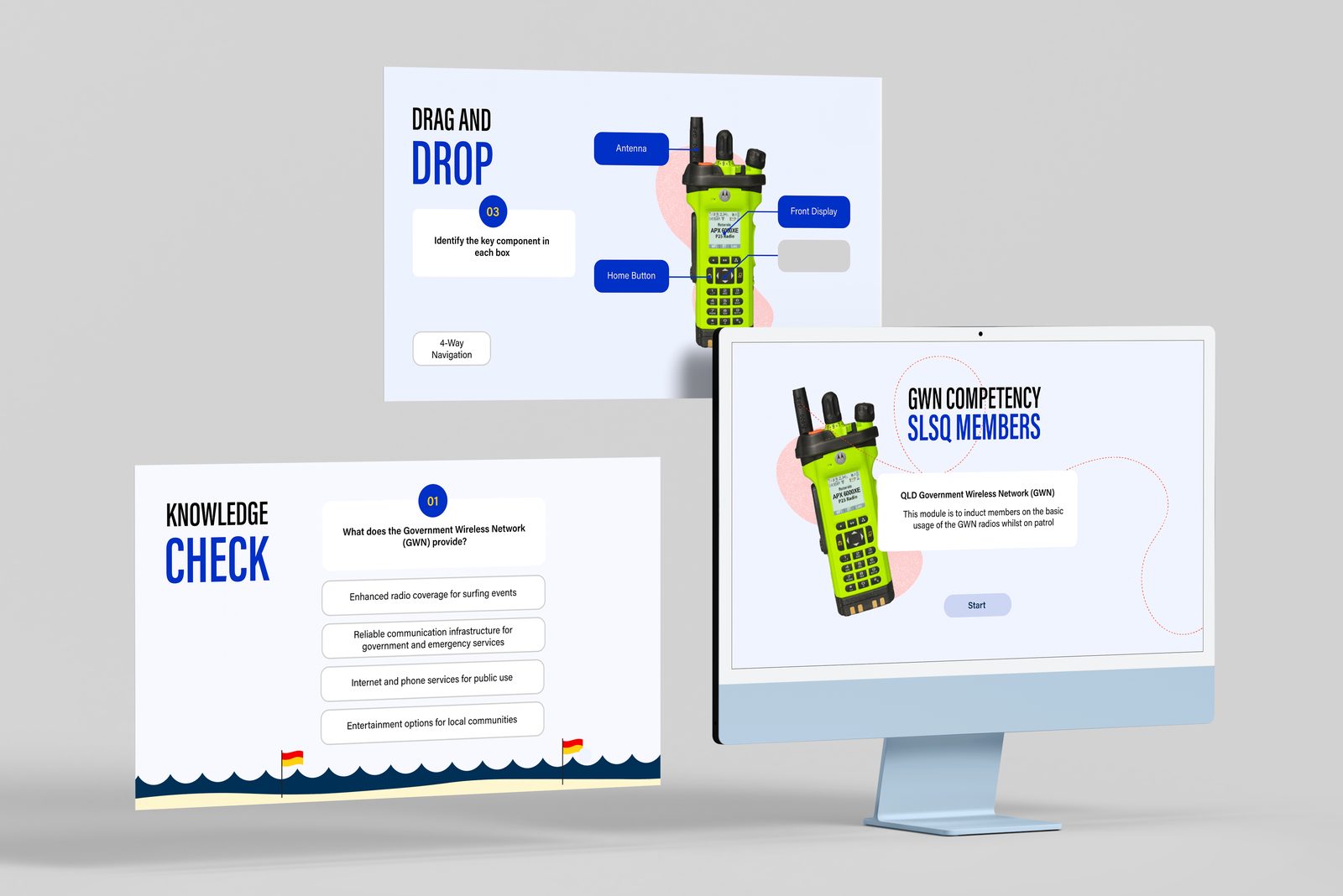
We built a short, interactive module that introduces the GWN radio and the way it is used on patrol. Instead of scrolling through a list of features, members learn by doing. A drag-and-drop activity has them label the parts of the handset, from the antenna and front display to the four-way navigation, so the device feels familiar well before they are holding the real one.
From there the course walks through when and how to use the radio during a patrol, the basics of clear communication, and a knowledge check that confirms members understand what the network is for and how to operate it. The whole module is designed in Surf Life Saving Queensland's own look and feel, so it reads as part of the organisation rather than a generic compliance course.
The result
The module gives every patrolling member the same starting point. Rather than picking up radio skills informally on the day, they arrive already knowing the handset and how it fits into a patrol. Because it is self-paced and mobile-friendly it scales across the whole volunteer base without pulling trainers off the beach, and it gives the organisation a clear record that each member has completed their radio competency.